

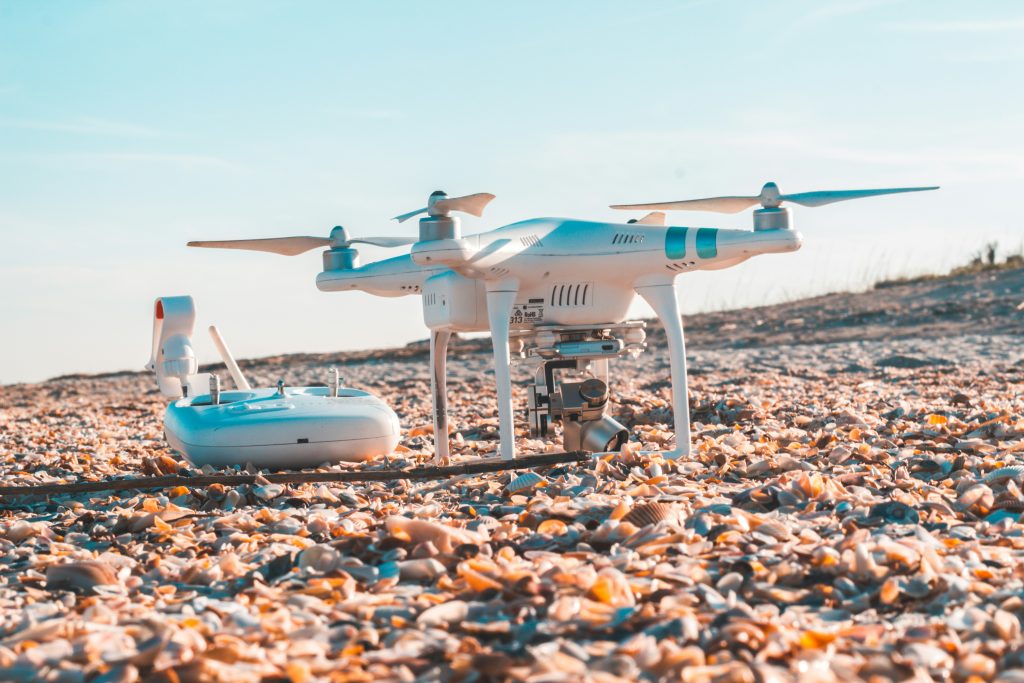
Introduction to Drone Technology
Drones, or unmanned aerial vehicles (UAVs), have seen significant advancements in recent years, particularly in the realm of autonomous navigation systems. These systems enable drones to operate without direct human control, allowing for a wide range of applications from delivery services to agricultural monitoring and disaster response.
The Importance of Autonomous Navigation
Autonomous navigation is crucial for the effective deployment of drones in various industries. It involves the use of sensors, algorithms, and artificial intelligence (AI) to allow drones to understand their environment and make decisions based on real-time data. This capability is essential for tasks such as obstacle avoidance, route optimization, and mission planning.
Key Technologies in Autonomous Navigation
- Sensors: Drones are equipped with various sensors that provide critical data about their surroundings. Common sensors include:
- LiDAR (Light Detection and Ranging): This technology uses laser light to measure distances and create detailed 3D maps of the environment.
- Cameras: High-resolution cameras capture images that can be processed using computer vision techniques for object detection and recognition.
- GPS (Global Positioning System): GPS provides location data but can be unreliable in urban environments or areas with poor satellite visibility.
- Artificial Intelligence and Machine Learning: AI algorithms analyze sensor data to make real-time decisions. Machine learning models can be trained on vast datasets to improve the drone’s ability to recognize objects, predict obstacles, and adapt to changing conditions.
- Simultaneous Localization and Mapping (SLAM): SLAM is a technique used by drones to build a map of an unknown environment while simultaneously keeping track of their own location within that map. This is particularly useful in complex environments where GPS signals may be weak or unavailable.
- Path Planning Algorithms: These algorithms determine the most efficient route for a drone to take while avoiding obstacles. Techniques such as A* search algorithm or Rapidly-exploring Random Trees (RRT) are commonly used for this purpose.
Recent Developments in Autonomous Navigation Systems
Recent research has focused on enhancing the reliability and efficiency of autonomous navigation systems through several innovative approaches:
- Swarm Robotics: Researchers are exploring how multiple drones can work together autonomously as a swarm. Each drone communicates with others to share information about obstacles and optimize collective tasks such as search-and-rescue missions or environmental monitoring.
- Enhanced Computer Vision: Advances in deep learning have significantly improved computer vision capabilities, allowing drones to better identify objects and navigate complex environments even under varying lighting conditions.
- Integration with 5G Networks: The rollout of 5G technology offers higher bandwidth and lower latency communication between drones and ground control stations, enabling more sophisticated autonomous operations over longer distances.
- Regulatory Frameworks: As drone technology evolves, regulatory bodies are also adapting their frameworks to ensure safe integration into national airspaces. Research is ongoing into developing standards for autonomous flight operations that prioritize safety while promoting innovation.
Challenges Ahead
Despite these advancements, several challenges remain in the development of autonomous navigation systems for drones:
- Safety Concerns: Ensuring that drones can operate safely around people and property is paramount. This includes developing fail-safe mechanisms that allow drones to land safely if they encounter technical issues.
- Data Privacy Issues: The use of cameras and sensors raises concerns about privacy infringement, necessitating clear regulations governing drone surveillance capabilities.
- Technical Limitations: Current technologies still face limitations regarding battery life, payload capacity, and operational range which researchers are actively working to overcome.
Conclusion
The research and development surrounding autonomous navigation systems for drones represent a rapidly evolving field with vast potential across numerous sectors. As technology continues to advance, it will likely lead not only to enhanced operational capabilities but also new applications that we have yet to fully realize.
